

Hiring the right equipment for an event isn’t just about ticking boxes on a list. It’s a strategic process. Get it right, and your event runs like a well-oiled machine. Get it wrong, and you’re facing last-minute chaos that could have been avoided.
It all comes down to a simple flow: figure out what you actually need, find a reliable hire partner you can trust, and nail down the delivery and setup logistics. This initial planning is your best defence against things going sideways on the day.
Defining Your Event Equipment Needs
The single most important step in the entire process happens before you even think about calling a supplier: defining your equipment needs with absolute clarity. This isn’t just a quick inventory. It’s about mapping every single item from the sound system down to the coffee cups directly to your event’s goals, your venue’s limitations, and the experience you want to create for your guests.
A corporate conference, for instance, lives or dies by its AV gear. A Christmas Office Party, on the other hand, might prioritise themed sets and atmospheric lighting to create the right mood.
Nailing this first step is everything. It sets the foundation for your budget, your choice of vendors, and your entire logistical plan.
Categorising Your Equipment Needs
To get a real handle on things, I always recommend breaking your equipment list into three clear categories. This simple framework helps you prioritise your spending and ensures you’ve covered all the bases without blowing the budget on things that aren’t critical.
- Essentials: These are your non-negotiables. The items without which the event simply cannot happen. Think core infrastructure like power generators, basic lighting, a sound system for speeches, and furniture like tables and chairs.
- Enhancements: This is where you elevate the guest experience. These items go beyond the basics and add a touch of class or excitement. We’re talking decorative lighting, high-definition projectors for branding, upgraded linens, or a professional stage for your performers.
- Contingencies: I call this the “what if” list. This covers backup equipment and items you might need for unforeseen circumstances. A few extra cables, a spare microphone, or some outdoor heaters in case the temperature suddenly drops. Trust me, you’ll thank yourself later.
This diagram shows how this initial planning phase sets the stage for everything that follows.
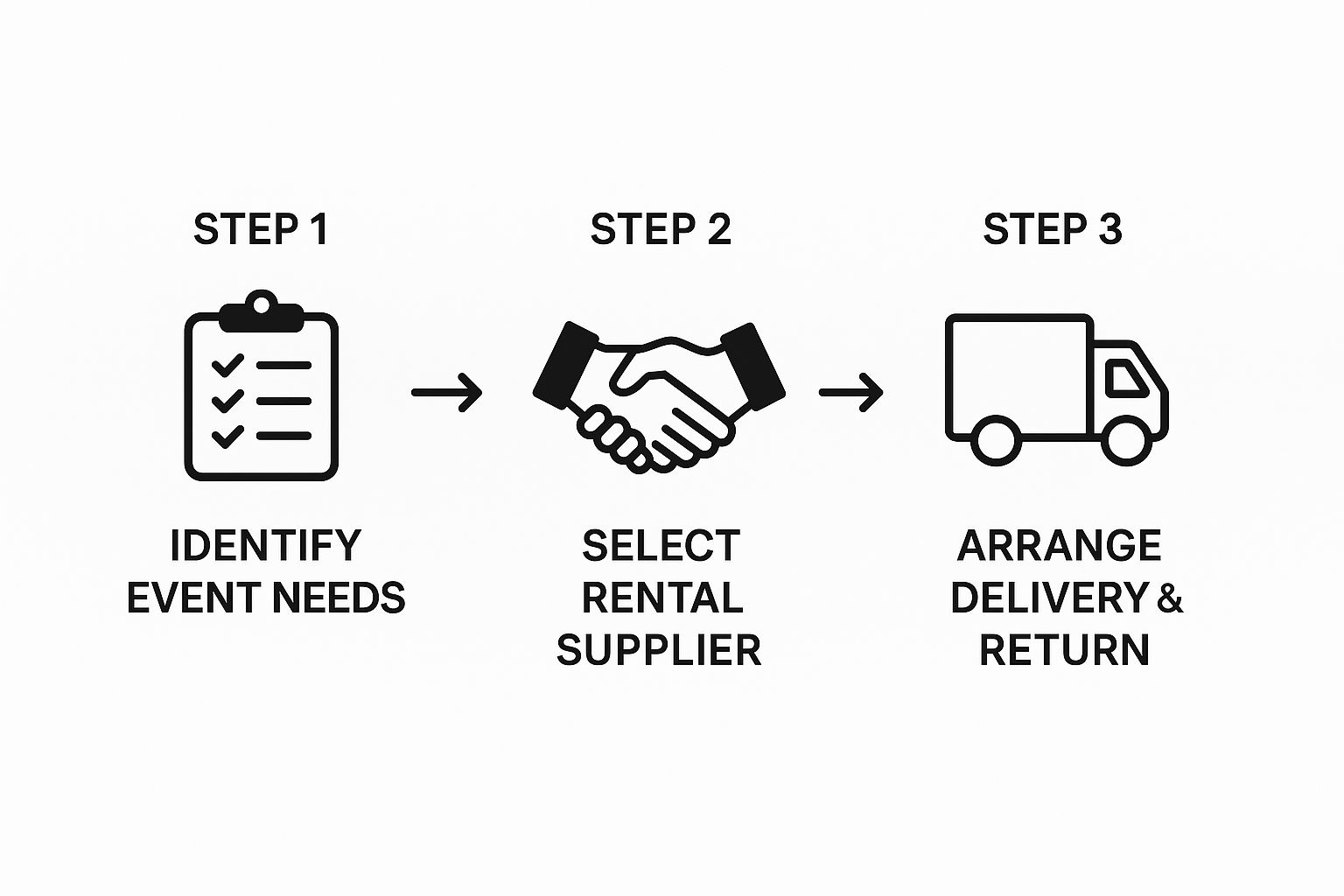
As you can see, identifying your needs is the cornerstone that every other decision rests on.
Beyond the Big Items
While it’s easy to focus on the big-ticket items like staging and sound systems, overlooking the small stuff can quickly derail an otherwise perfect event. This is especially true if you’re using an outdoor space or an unconventional venue that lacks permanent facilities.
Forgetting basics like toilets is a classic rookie mistake. When you’re planning for amenities, a Comprehensive Guide to Event Toilet Hire can be a lifesaver, ensuring you get the numbers and types right for your crowd.
To help you structure this process, here’s a simple framework to make sure your equipment list is comprehensive and aligned with your event’s goals and budget.
Event Equipment Needs Assessment Framework
This table provides a structured way to categorise and prioritise your equipment needs to ensure a comprehensive and budget-aligned plan.
| Category | Description | Example Equipment |
|---|---|---|
| Audio-Visual (AV) | Equipment for sound, video, and lighting to engage the audience. | Microphones, speakers, projectors, screens, stage lighting, mixing desks. |
| Furniture & Staging | Items that provide structure and comfort for guests and performers. | Tables, chairs, linens, staging platforms, lecterns, dance floors. |
| Catering & Bar | All necessary gear for food and beverage service. | Ovens, refrigerators, glassware, crockery, cutlery, mobile bar units. |
| Power & Utilities | The infrastructure needed to run everything else safely. | Generators, power distribution boxes, cabling, heating units, portable toilets. |
| Decor & Ambiance | Items that enhance the theme and atmosphere of the event. | Themed props, centrepieces, draping, custom signage, decorative lighting. |
| Safety & Contingency | Equipment for safety compliance and to manage unexpected issues. | Fire extinguishers, first aid kits, backup generators, extra cables, barriers. |
Using a table like this forces you to think through every aspect of the event, from the headliners to the behind-the-scenes necessities. It turns a vague idea into an actionable, detailed plan.
Remember: The goal isn’t just to have equipment; it’s to have the right equipment for your specific audience and venue. A detailed plan prevents overspending and ensures every pound invested contributes directly to the event’s success.
The UK event equipment rental market is a serious business, a key part of a global industry valued at around USD 15 billion in 2023. It’s projected to hit USD 25 billion by 2032, largely driven by the ever-growing demand for high-end, professional audio-visual gear. This growth highlights just how critical the right equipment has become to creating successful, memorable events.
Finding the Right UK Equipment Hire Partner
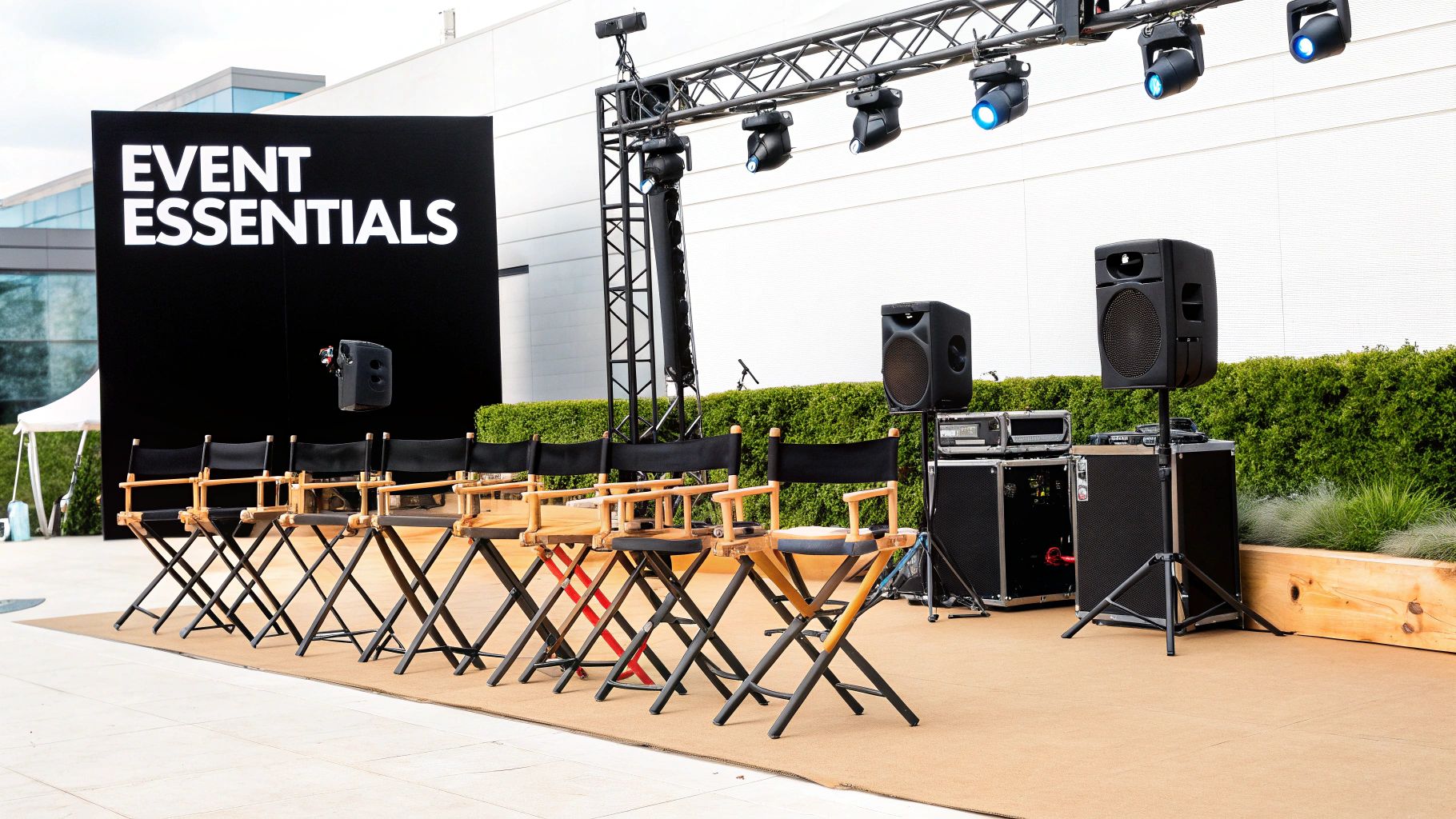
Once you’ve got a clear picture of your needs, the real work begins: finding the right company for hiring equipment for events. Let me be clear this goes way beyond just comparing price lists. Your hire company is essentially a partner in your event’s success. Their reliability, the quality of their kit, and their service can genuinely make or break the entire experience.
The best partners I’ve worked with get it. They understand they aren’t just dropping off boxes; they’re contributing to a live production. You should be looking for a company that feels like an extension of your own team. That means finding specialists who are invested in your event’s outcome, not just a supplier focused on ticking off an order.
Evaluating Reputation and Reliability
Before you even think about asking for a quote, you need to vet a company’s reputation. A cheap price means absolutely nothing if the gear arrives late, looks like it’s been through a war, or if the technical support vanishes when you need it most.
Start by digging for genuine reviews and case studies from events similar to yours. Pay close attention to any feedback that mentions staff professionalism, their ability to solve problems on the fly, and sheer punctuality. These are the intangible qualities that prove invaluable on event day when the pressure is on.
Pro Tip: Ask potential hire companies for references from two or three recent clients who held events of a similar scale and style to yours. A confident and reliable partner will have no hesitation in connecting you with happy customers.
In the UK, the event rental industry is incredibly diverse, covering everything from basic tables and chairs to complex staging and high-end AV setups. The companies that thrive are those that innovate and use technology to deliver custom experiences. You can find out more about the UK event equipment rental market on ibisworld.com.
Key Questions to Ask Potential Partners
When you start conversations with potential suppliers, your questions need to probe deeper than just costs and inventory. The real goal is to get a feel for their processes, their expertise, and what happens when things go wrong. A quality hire company will welcome detailed questions.
Here are a few essential questions I always ask to guide the conversation:
- Experience: Can you show me examples of events you’ve supplied that are similar in scope and style to mine? This helps gauge their direct experience, not just their general capabilities.
- Contingency Plans: What’s your protocol if a key piece of equipment, like a projector or sound desk, fails on-site? Understanding their emergency response is crucial.
- Insurance: Can you provide a copy of your public liability insurance? Make sure their coverage is adequate for your venue and event type.
- On-Site Support: Do you offer technical support staff to remain on-site during the event? For complex AV or lighting rigs, this can be a non-negotiable.
Asking these questions helps you build a picture of their operational competence. Their answers will reveal their level of professionalism and preparedness, which are far more valuable than a slightly cheaper quote. A good partner invests in reliability, and their answers will reflect that commitment.
Budgeting and Negotiating Your Hire Agreement
Let’s be honest: a well-managed event is an on-budget event. The financial side of hiring equipment for events is where so many brilliant plans fall apart, but it doesn’t have to be that way. With a bit of strategic thinking, you can lock in great value without any nasty surprises down the line. It all starts by turning your equipment list into a realistic, line-by-line budget.
Your initial budget should be a direct reflection of that equipment list you’ve carefully put together. Spend some time researching the going rates for your big-ticket items things like marquee hire, AV packages, and furniture. This homework gives you a solid baseline and becomes your secret weapon when quotes start coming in. You’ll be able to spot an overpriced proposal from a mile away.
Decoding the Hire Quote
When quotes land in your inbox, it’s easy to fixate on that big total at the bottom. But the real story is always hiding in the fine print. A quote that looks like a bargain can quickly balloon once you factor in all the additional and often overlooked costs. Your job is to become an expert at spotting these potential budget-killers.
A standard quote often has several fees lurking beneath the surface that can seriously inflate your final bill. Always look for and ask about these specific items:
- Delivery and Collection Fees: Are these included? Do the rates change for weekends or out-of-hours delivery?
- Setup and Teardown Labour: Is the crew’s time for installation and dismantle bundled in, or is it a separate hourly charge? This can add up fast.
- Damage Waiver Insurance: A common add-on, but you need to know what it covers and, more importantly, what it doesn’t.
- Late Return Penalties: What happens if the event overruns or collection gets delayed? Know the exact fees.
The most powerful tool in any negotiation is knowledge. By understanding every potential charge on a quote before you sign, you shift from a reactive position to a proactive one. It’s the best way to protect your budget and prevent those last-minute financial scrambles.
Strategies for Smart Negotiation
Negotiating isn’t about hammering a supplier for a lower price. It’s about finding common ground where everyone wins. A good hire company genuinely wants your event to succeed their reputation depends on it. Think of it as building a partnership, not just completing a transaction.
A great place to start is by asking about bundling. If you’re hiring AV, staging, and furniture from the same company, there’s almost always room for a package discount. This approach doesn’t just save you money; it simplifies your logistics enormously by giving you a single point of contact.
Next, look at your payment terms. A deposit is standard, but you might be able to negotiate the payment schedule for the remaining balance. For instance, you could propose paying 50% thirty days out and the final 50% after the event. This can be a huge help for your own cash flow.
Finally, never underestimate the power of flexibility. If your event dates aren’t set in stone, ask if they have off-peak periods or certain weekdays where rates are lower. A small shift in your schedule could unlock significant savings, freeing up funds you can then put towards making the guest experience even better.
Understanding the Hire Contract Fine Print
After all the negotiations, you’ll be handed the hire agreement. It’s tempting to just skim it and sign, but this document isn’t a mere formality. It’s the single most important piece of paper protecting your event, dictating every aspect of your relationship with the hire company.
Glossing over the details is a rookie mistake you can’t afford when hiring equipment for events. Think of the contract as your event’s legal blueprint. It outlines precisely what you get, when you get it, and who’s responsible if things go sideways. A single ambiguous clause can cause major budget headaches or, worse, logistical chaos on the day. Your mission is to spot these traps before you sign.
Diving Into Key Clauses
Every contract is different, but some clauses are universal and universally important. You need to pay extremely close attention to the sections covering liability, cancellations, and the specific responsibilities of each party. These are the areas where assumptions can cost you dearly.
For instance, imagine your hired generator fails mid-event, plunging your awards ceremony into darkness. The contract should clearly state the supplier’s obligation to provide a replacement and the timeframe for doing so. If it doesn’t, you could be left without power and with no legal leg to stand on.
Don’t just read the contract; stress-test it with “what if” scenarios. What if you need to cancel? What if the equipment arrives damaged? What if the collection is delayed? The answers should be crystal clear in the text.
Nailing Down Delivery, Collection, and Condition Protocols
One of the most common friction points is logistics. Your contract must explicitly define the delivery and collection windows. A vague promise of “delivery on event day” is a recipe for disaster. Insist on a specific time slot, like “between 9:00 and 11:00,” so you can properly schedule your setup crew.
A solid contract will also outline the protocol for inspecting equipment upon arrival. You need a clear process for reporting any faulty or substandard items immediately. This protects you from being held liable for pre-existing damage. Make sure the agreement details who to contact and how to document the issue a quick photo on your phone can be invaluable.
To help you out, I’ve put together a quick rundown of the clauses that demand your full attention. It’s a cheat sheet for spotting potential problems before they happen.
Key Clauses in an Equipment Hire Agreement
| Clause | What to Look For | Potential Red Flag |
|---|---|---|
| Damage & Liability | A clear definition of “damage” vs. “normal wear and tear.” It should specify your financial liability limits. | Vague language like “hirer is responsible for all damages,” with no mention of limits or the role of a damage waiver. |
| Cancellation Policy | A tiered cancellation structure. For instance, a 50% fee if cancelled within 30 days and 100% within 14 days. | A blanket 100% cancellation fee regardless of when you give notice. This shows a real lack of flexibility. |
| Substitution | The right for the supplier to substitute items. It must state any substitutes will be of equal or greater spec. | A clause allowing the supplier to provide “similar” items without defining what that means. You could end up with lower-quality gear. |
Think of this table as your first line of defence. By knowing what to look for, you can negotiate from a position of strength and ensure your event is built on a solid, fair, and transparent agreement.
Coordinating On-Site Delivery and Setup
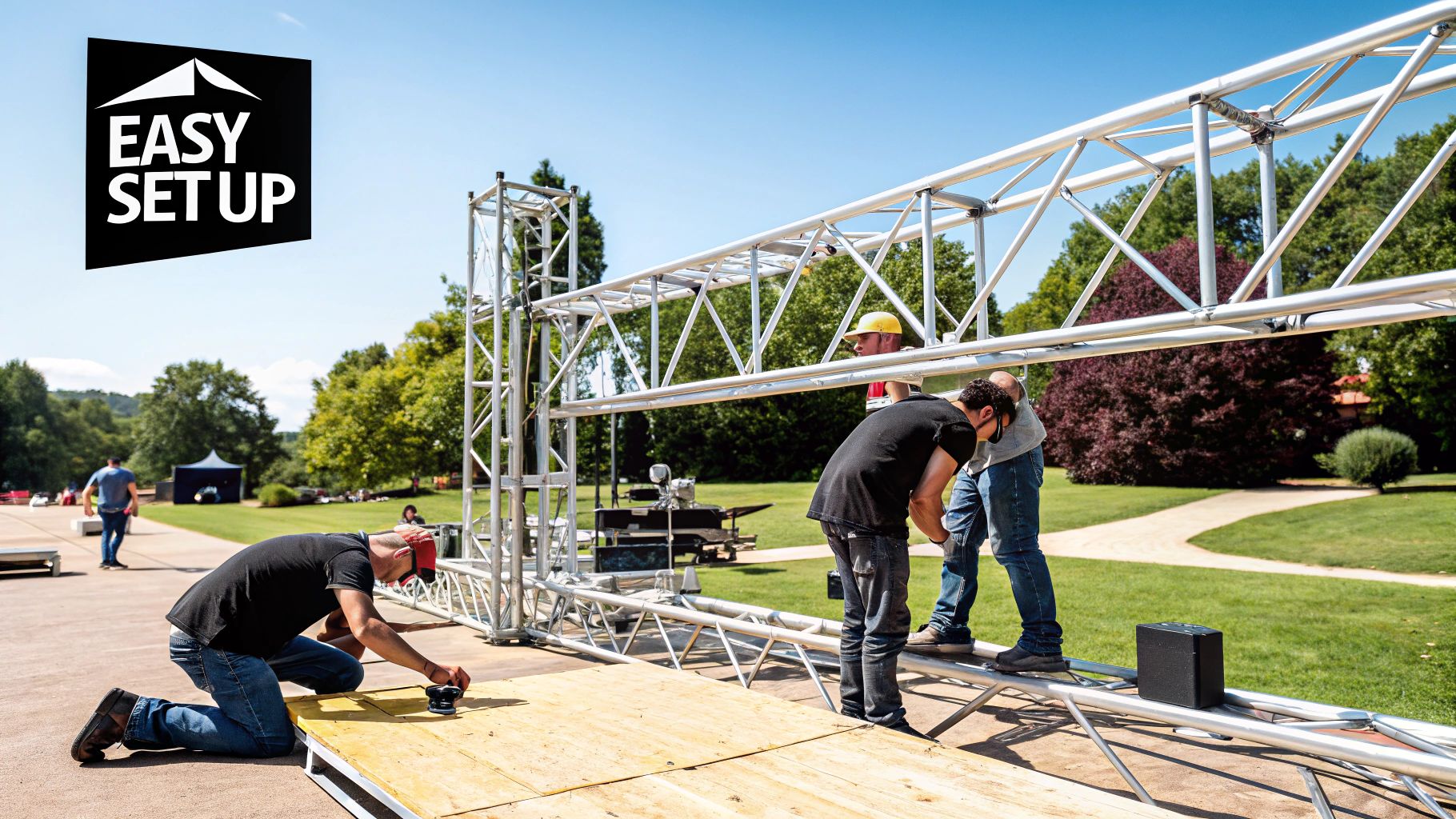
On event day, all your meticulous planning comes together. This is where seamless execution turns a potentially chaotic setup into a professional, well-oiled machine. Honestly, the ability to manage the delivery, installation, and testing of hired equipment is what separates a seasoned event planner from an amateur. It all comes down to watertight planning and crystal-clear communication.
Your success hangs on the relationship between three key people: you, your hire company, and the venue manager. They need to be perfectly in sync. The best way to get there? Create a shared, detailed timeline that everyone has seen and agreed to. This document becomes the single source of truth, eliminating any chance of crossed wires.
The Power of the Pre-Event Site Visit
Never, ever underestimate the power of walking the ground before the event. A pre-event site visit with your hire company’s technical manager isn’t just a nice-to-have; it’s absolutely essential when you’re hiring equipment for events. It’s your golden opportunity to physically map out where everything goes and, more importantly, to spot potential disasters before they happen.
During this walkthrough, you can nail down the answers to critical questions:
- Access Routes: How will the delivery lorries even get to the loading bay? Are there any sneaky height or weight restrictions we need to know about?
- Power Supply: Where are the power outlets? Will they handle the load from the lighting rig and sound system, or do we need to bring in generators?
- Placement: Is the floor level enough for the stage to be stable? Is there a secure, dry place to stash equipment cases during the event itself?
Answering these questions on-site means the setup crew arrives fully prepared, preventing those heart-stopping, last-minute scrambles. It’s all about anticipating problems instead of just reacting to them.
Expert Insight: I once managed an event where a last-minute venue change forced us to skip the site visit. Big mistake. The delivery crew arrived to find the main lift was out of service. They had to haul a full sound system up three flights of stairs, which caused a three-hour delay and nearly pushed back our start time. A simple 30-minute walkthrough would have avoided the entire nightmare.
Creating Your On-Site Playbook
Once the site visit is done and dusted, your next job is to draw up a clear, visual floor plan. This doesn’t need to be a fancy architectural diagram. In fact, a simple, clearly labelled sketch often works better. Mark the exact placement for staging, speakers, screens, lighting rigs, and even furniture. Then, share it with both the venue and the hire company’s crew chief.
Think of this floor plan as your on-site playbook. It kills ambiguity and empowers the setup crew to get on with their jobs efficiently, without having to constantly stop and ask for directions. It’s how you make sure that when the catering team shows up to arrange tables, the AV team has already run their cables exactly where they need to be.
A vital piece of this playbook is establishing a single point of contact on the day. This should be one person from your team who has the authority to make quick decisions and is the only person the hire crew liaises with. This simple step prevents conflicting instructions and streamlines communication when time is of the essence. It’s the final, crucial step to ensuring your event setup is just as flawless as the main event itself.
Making Sustainable Choices in Equipment Hire
Event planning today isn’t just about logistics and aesthetics anymore; it comes with a serious responsibility to the environment. An event’s success is now often measured by its footprint, making sustainable choices a top priority when hiring equipment for events.
This isn’t just about feeling good, either. It’s a sharp business decision. Audiences are more eco-conscious than ever, and a genuine commitment to sustainability can do wonders for your brand’s reputation. Picking the right hire partner is a huge part of getting this right.
Identifying Genuine Green Credentials
You have to be able to tell the difference between companies that just talk about being “green” and those that actually walk the walk. This means asking the right questions and looking for real proof, not just vague mission statements. A truly sustainable partner will be open and transparent about what they do.
When you’re vetting potential suppliers, get specific about their green initiatives:
- Energy Efficiency: Do they supply low-energy LED lighting? Are their AV systems modern and energy-efficient?
- Material Sourcing: Can they tell you exactly how they use recycled or upcycled materials for set builds and décor?
- Waste Reduction: What are their policies on minimising packaging and waste, both in their own warehouse and on-site at your event?
Their answers will tell you everything you need to know. A partner who gives you clear, confident answers is probably building sustainability into their core operations, not just their marketing slogans.
A company’s approach to sustainability is a direct reflection of its operational standards. A supplier that is meticulous about its environmental impact is often equally meticulous about equipment quality, safety, and client service. This is a powerful indicator of a high-quality partner.
The Impact of Local Sourcing and Operations
One of the simplest and most effective ways to shrink your event’s carbon footprint is to hire local suppliers. When you partner with a company nearby, you slash the transport emissions that come with moving heavy, bulky equipment back and forth.
This approach has a great side effect, too. Your investment stays in the community, supporting local businesses and jobs.
Looking ahead, the UK event rental sector is navigating a landscape of both economic caution and major opportunities tied to green practices. There’s an undeniable industry shift towards sustainable equipment hire, pushed by client demand and tougher environmental standards. You can read more about the future of equipment rental on internationalrentalnews.com.
Don’t stop there ask about their internal operations. Do they use eco-friendly cleaning products on their gear? How do they plan their delivery routes to cut down on fuel? These small details add up, showing a real commitment to reducing their impact, which in turn helps you deliver a more responsible and respected event.
At Boo Productions, we build sustainability into the heart of our creative process. From upcycling materials in our bespoke set designs to implementing energy-efficient AV solutions, we help you create breathtakingly immersive events that are as responsible as they are memorable.
Discover how our creative, sustainable approach can transform your next event by visiting Boo Productions.